


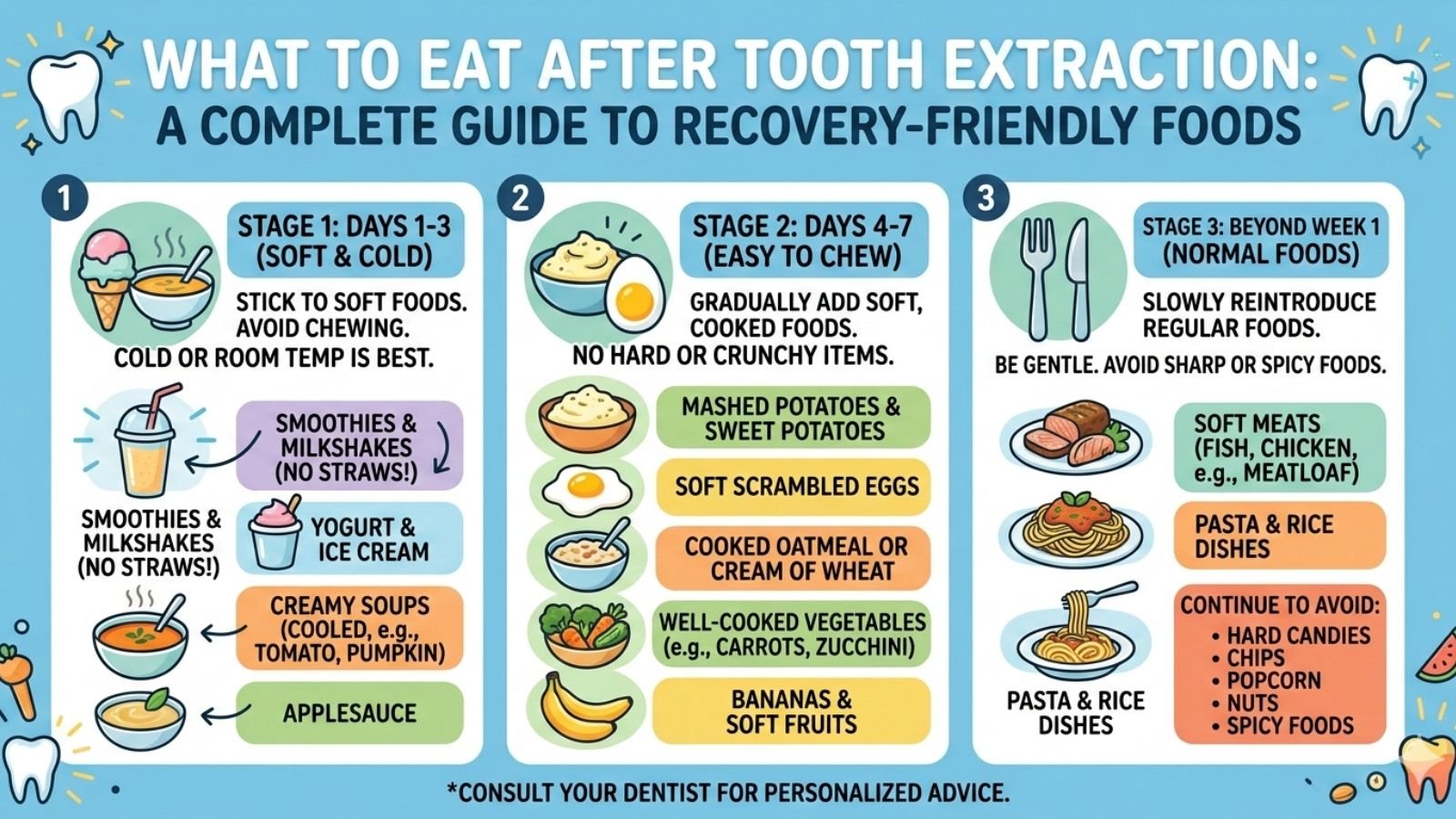
Knowing what to eat after tooth extraction is essential for a smooth and comfortable recovery. Oral surgery leaves your mouth sensitive, and choosing the right foods can reduce pain, prevent complications, and speed up healing. Whether you’ve had a simple tooth removal or more complex oral surgery, diet plays a major role in recovery.
In this comprehensive guide, we’ll explain what you can eat after oral surgery, what foods to avoid, and provide a tooth extraction recovery meal plan to help you heal faster and safely.
Why Diet Matters After Tooth Extraction
After a tooth extraction, your body forms a blood clot at the surgery site. This clot protects the bone and nerves underneath and allows healing to begin. Eating the wrong foods can disturb this clot, increasing the risk of dry socket, infection, and prolonged pain.
The best foods after oral surgery are:
- Soft
- Easy to chew
- Nutrient-rich
- Lukewarm or cool
- Non-irritating
What Can You Eat After Oral Surgery?
First 24 Hours After Tooth Extraction
The first day is critical for healing. Stick to soft, smooth foods that require no chewing.
Best foods to eat after tooth extraction (Day 1):
- Yogurt (plain or flavored, no chunks)
- Applesauce
- Mashed potatoes
- Smooth soups (lukewarm, not hot)
- Pudding
- Jell-O
- Protein shakes (without a straw)
- Ice cream or sorbet (no crunchy toppings)
Avoid hot temperatures, as heat can dissolve the blood clot and slow healing.
2–3 Days After Tooth Extraction
As swelling and pain decrease, you can slowly introduce slightly thicker soft foods.
Soft foods after oral surgery include:
- Scrambled eggs
- Oatmeal (cooled)
- Cottage cheese
- Smooth mashed avocado
- Cream of wheat
- Soft tofu
- Blended vegetables
Chew on the opposite side of the extraction site and continue avoiding hard textures.
4–7 Days After Tooth Extraction
By this stage, healing is progressing well, and many patients can tolerate gentle chewing.
Foods you can eat during recovery:
- Soft pasta
- Mac and cheese
- Soft rice
- Pancakes
- Bananas
- Well-cooked vegetables
- Shredded chicken or fish
Continue eating slowly and carefully to protect the extraction site.
What Can’t You Eat After Oral Surgery?
Knowing what not to eat after tooth extraction is just as important as knowing what’s allowed.
Foods to Avoid After Tooth Extraction
Hard or crunchy foods:
- Chips
- Nuts
- Popcorn
- Crackers
- Toast
Sticky or chewy foods:
- Gum
- Caramel
- Taffy
Spicy or acidic foods:
- Hot sauce
- Citrus fruits
- Tomato-based sauces
- Vinegar-heavy foods
Hot foods and drinks:
- Hot coffee
- Tea
- Soup served hot
Small particles:
- Seeds
- Rice
- Quinoa
These foods can dislodge the blood clot, irritate the wound, or get stuck in the extraction site.
Why Straws Are Dangerous After Tooth Extraction
Using a straw creates suction in the mouth, which can pull out the protective blood clot. This may cause dry socket, a painful condition that delays healing.
Avoid straws, smoking, and vaping for at least 72 hours, or as advised by your dentist.
Tooth Extraction Recovery Meal Plan
Below is a sample tooth extraction recovery meal plan to make healing easier and stress-free.
Day 1 Meal Plan
Breakfast
- Yogurt
- Applesauce
Lunch
- Lukewarm blended vegetable soup
- Pudding
Dinner
- Mashed potatoes
- Protein shake (no straw)
Day 2–3 Meal Plan
Breakfast
- Scrambled eggs
- Smooth banana mash
Lunch
- Oatmeal (cooled)
- Cottage cheese
Dinner
- Creamy soup
- Mashed avocado
Day 4–7 Meal Plan
Breakfast
- Pancakes
- Soft fruit
Lunch
- Soft pasta with mild sauce
- Steamed vegetables
Dinner
- Shredded chicken or fish
- Soft rice
Nutrients That Speed Up Healing
Including healing-boosting nutrients can support recovery.
Protein: repairs tissue
Sources: eggs, yogurt, protein shakes
Vitamin C: supports gum healing
Sources: blended fruits, supplements
Zinc: boosts immune response
Sources: dairy, soft meats
Calcium: supports bone health
Sources: milk, cheese, yogurt
Hydration After Tooth Extraction
Staying hydrated helps reduce swelling and speeds healing.
- Drink plenty of water
- Avoid alcohol
- Avoid carbonated drinks
- Do not use straws
Sip gently and consistently throughout the day.
How Long Should You Follow a Soft Food Diet?
Most patients need a soft food diet for 5 to 7 days, though wisdom tooth extractions may require longer. Always follow your dentist’s specific instructions.
You can return to normal eating once:
- Pain decreases
- Swelling subsides
- Chewing feels comfortable
- No bleeding occurs
When to Contact Your Dentist
Call your dentist if you experience:
- Severe or increasing pain
- Bad taste or odor
- Fever
- Bleeding that doesn’t stop
- Signs of dry socket
Early treatment prevents complications.
Final Thoughts: Eating Right After Tooth Extraction
Choosing the right foods after oral surgery is crucial for a smooth recovery. Understanding what to eat after tooth extraction, what foods to avoid, and following a structured tooth extraction recovery meal plan can significantly reduce discomfort and promote faster healing.
Stick to soft, nutrient-rich foods, stay hydrated, and avoid risky eating habits. With proper care, your mouth will heal quickly, allowing you to return to your normal diet and daily activities.
